
The Morning It Won't Open
You hit the opener button, and nothing happens. Or worse, the motor runs but the door barely creeps up before stopping, groaning, or reversing. Maybe you can see a thin rim of ice along the bottom edge where the door meets the concrete. This is one of the most common calls we get once the deep cold sets in around Barry County, and it usually isn't one big problem. It's a stack of small winter issues, and most of them show up in a predictable order.
First Check: Is the Door Actually Frozen to the Floor?
Before anything mechanical gets blamed, check the obvious. If there was any moisture on the garage floor overnight, from melted snow tracked in, a wet car, or condensation, the rubber weatherstripping along the bottom of the door can freeze solid to the concrete. The door isn't broken. It's glued down by a sheet of ice you can't always see.
The fix: Never force the opener against a frozen seal. That's how you strip a drive gear, snap a cable, or burn out a motor. Instead, use a heat gun, hair dryer, or even warm water poured along the seal line to melt the ice loose, then try the door by hand first. This is also why clearing snowmelt and slush off the garage floor before it refreezes matters more here than it might in a milder climate.
Second Check: Hardened Lubricant and Dirty Tracks
If the door isn't frozen to the ground but still moves like it's dragging something, the next suspect is lubrication. Standard grease and oil thicken in deep cold, and anything that was already old or dirty on the rollers, hinges, and tracks turns almost gummy at low temperatures. Combine that with road salt residue tracked in on tires and boots, and you get grit working its way into the roller bearings.
The fix: Tracks get wiped clean, old grime is removed, and everything gets a fresh application of a lubricant rated for cold weather, not household oil, which can actually gum up worse once it chills. This is routine maintenance, but it matters more in winter because the margin for a sticky roller is a lot smaller when it's fifteen degrees out.
Third Check: Spring Tension Changes
Steel contracts in the cold, and torsion springs are no exception. A spring that was perfectly balanced in October can feel noticeably heavier or weaker in January, because the metal itself has tightened up slightly. If the door feels unusually heavy when lifted manually, or the opener strains and makes a louder motor noise than usual, tension is likely part of the story.
The fix: This is not a DIY adjustment. Torsion springs are under serious stored force, and small tweaks require the right bars and technique. A technician checks the balance by testing the door disconnected from the opener, then adjusts tension as needed. If a spring was already near the end of its cycle life, cold weather is often what finally reveals it, which is when spring replacement becomes the real fix instead of a temporary adjustment.
Fourth Check: Opener Settings and Sensors
If the door is lubricated, balanced, and still struggling, the opener itself gets checked next. Cold affects the force and travel-limit settings on many openers, especially older units, which can cause the door to stop short, reverse unexpectedly, or strain right before reaching full open. Sensors can also get fooled by frost buildup or condensation on the lenses.
The fix: Wipe the sensor eyes clean and make sure nothing is blocking the beam. Beyond that, force and limit settings sometimes need recalibrating for the season, which is a quick adjustment for a technician but not always obvious to find on the unit itself.
Last Check: Cables, Rollers, and Track Alignment
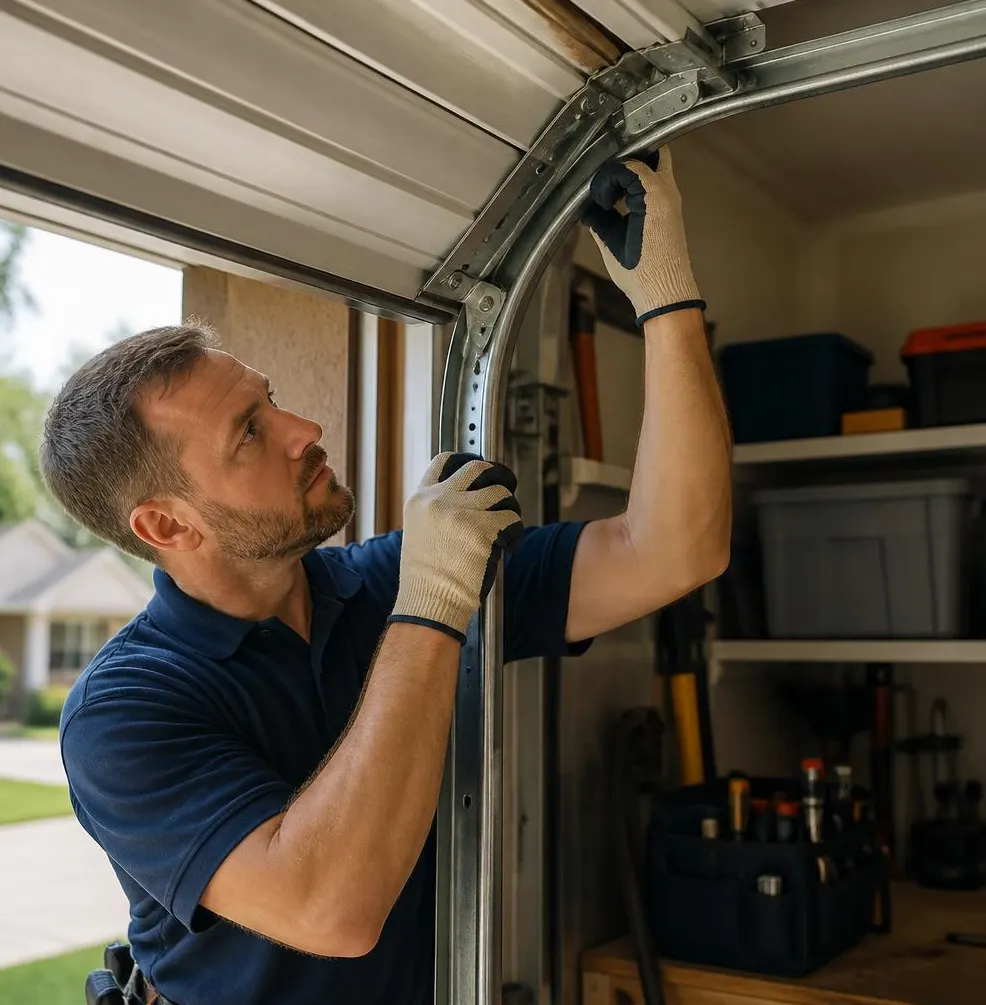
If everything above checks out and the door still binds in one spot, it's time to look at the cables and track alignment themselves. Cold makes metal more brittle, and a cable with existing fraying is more likely to show problems once temperatures drop and the door is working harder overall.
When to Call Middleville Garage Door
If you've cleared the ice, the door still won't balance right, or you hear new grinding or popping sounds when it moves, that's the point to stop troubleshooting and call us. We offer Garage Door Maintenance to get tracks, rollers, and lubrication sorted before the next cold snap does more damage, and Spring Replacement when tension issues turn out to be a spring at the end of its life rather than something cold weather will fix on its own. We'll walk the whole system, tell you plainly what's wearing out versus what's just cold, and get it handled before you're stuck outside scraping ice off a door that won't move.
If your garage door is sticking, groaning, or flat-out frozen this winter, call Middleville Garage Door. We serve Middleville, Hastings, Wayland, Caledonia, Delton, Nashville, Yankee Springs, and Woodland, and we're ready when the cold hits.